
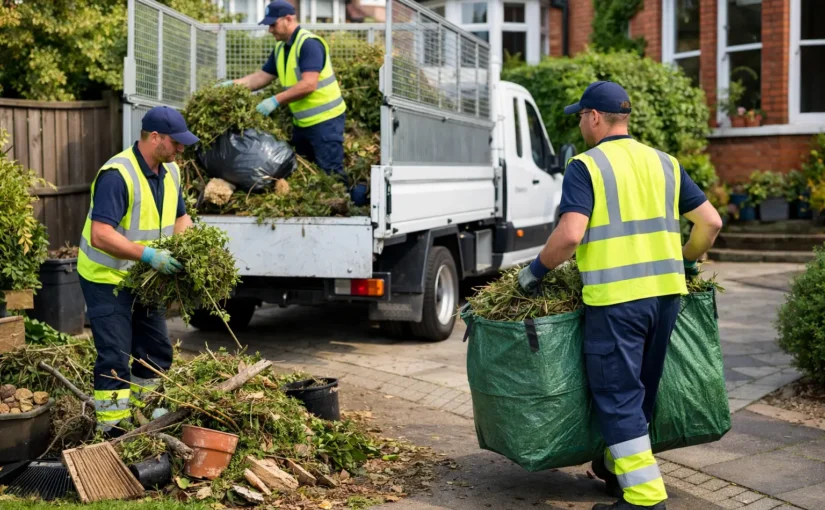
A garden can look transformed after one hard weekend of pruning, mowing and clearing. The awkward part is often the pile left behind: branches by the gate, old fence panels on the patio and bags of soil that will not fit in the wheelie bin. Understanding the garden waste rules UK households must follow helps you clear it without risking a rejected collection, a blocked pavement or an illegal disposal problem.
For Crouch End households, the right option depends on what you have removed. Fresh green cuttings are handled differently from soil, timber, rubble and old garden furniture. Treating it all as ‘garden waste’ is where many clear-outs go wrong.
What counts as garden waste?
In everyday terms, garden waste means biodegradable material produced while maintaining an outdoor space. Grass cuttings, leaves, hedge trimmings, small twigs, weeds, dead plants and fallen fruit will usually fall into this category. They may be suitable for a council garden-waste service, home composting or a properly arranged collection.
However, a garden clearance nearly always produces more than green waste. Soil is heavy and can contain rubble. Turf may contain soil and roots. Large branches may be too bulky for a bin. Fence panels, decking, sleepers, sheds and planters are wood waste, and painted or treated timber needs particular care. Pots, paving slabs, broken glass and outdoor furniture are separate waste streams again.
That distinction matters because recycling facilities and collection crews must keep materials separated. A bag of leaves contaminated with soil, plastic plant pots or broken ceramic pots may not be accepted with green waste.
Garden waste rules UK households should know
The central rule is simple: you have a duty to make sure your waste is disposed of properly, even when someone else takes it away. Leaving bags beside a public bin, placing waste on the pavement without an authorised collection, or using an unlicensed collector can lead to fly-tipping. The person who produced the waste can still face action if it is traced back to them.
Council arrangements differ between boroughs, so Crouch End residents should check the current Haringey collection terms before relying on a garden bin. Many local schemes are subscription-based and operate on set collection days. They also set limits on what can go in the bin. In general, loose garden cuttings and small prunings are more likely to be accepted than soil, turf, timber or large branches.
Do not assume a green bin is a general outdoor-clearance bin. The following items commonly need another disposal route:
- Soil, clay, rubble, stones and paving
- Fence panels, decking, sheds and treated timber
- Plant pots, plastic bags, garden tools and furniture
- Animal waste, food waste and household rubbish
- Paint, pesticides, fertilisers, fuel or other chemicals
- Large tree trunks, heavy roots and oversized branches
If you are taking waste to a recycling centre yourself, check the site’s rules before loading the car or van. Rules on commercial-style vehicles, proof of address, soil, construction materials and bulky timber can vary. Separate materials first if you can. It makes unloading quicker and gives more of the load a chance of being recycled.
Soil, turf and rubble need a separate plan
Soil is one of the most misunderstood parts of garden clearance. It is natural material, but it is not normally accepted in a standard garden-waste bin because of its weight and because it can contain stones, roots, rubble or contaminated material. The same is true of turf removed during a landscaping project.
A few bags of clean soil may be reusable elsewhere in the garden, but only if you genuinely have a use for it. Moving it into a corner simply creates another job later. For larger quantities, professional removal is often the more practical choice, particularly where access is tight or the garden is above ground level.
Rubble from old paths, broken slabs, bricks and concrete must be kept apart from green waste. These materials can often be recycled as aggregates through the correct facility, but they cannot be mixed into a compostable load. If your project includes both hard landscaping and hedge cutting, keeping them in separate piles will make collection more efficient and help avoid unnecessary disposal charges.
Trees, branches and hedge cuttings
Small branches and hedge cuttings can usually be reduced by cutting them down to manageable lengths. There is no benefit in forcing oversized branches into a bin or tying loose bundles to railings outside your property. They can obstruct pedestrians, damage containers and may not be collected.
For a substantial prune, fallen tree or overgrown hedge, consider the volume before you start. A few black bags can quickly become a full van load once branches are included. This is especially relevant in Crouch End, where garden access can be narrow and parking can be limited. A hands-on collection avoids the need to hire a skip, obtain a skip permit or leave waste waiting outside.
Burning garden waste may seem like the quickest answer, but it is rarely the neighbour-friendly one. Smoke, ash and smells can cause a statutory nuisance, particularly in closely built-up streets. Burning treated wood, painted timber, plastics or household waste is never an appropriate disposal method. Composting suitable green material or arranging a responsible collection is usually the cleaner choice.
Watch for invasive plants and hazardous products
Most weeds can be composted or removed with ordinary green waste, but invasive plants need more caution. Japanese knotweed, for example, should not be casually cut up, moved through the garden or placed in a normal compost heap. Its disposal is controlled, and poor handling can spread it. If you suspect an invasive species, seek specialist advice before arranging removal.
Garden chemicals are another separate category. Weedkiller, pesticide, paint, creosote, petrol and oil should remain in their original containers where possible and must not go into green bins, drains or general rubbish sacks. The same goes for old gas cylinders, electrical garden equipment and batteries. Tell a clearance provider about these items in advance so they can advise on the correct route.
Choosing a responsible garden clearance service
A clearance company should do more than load bags into a van. Ask whether the business is registered to carry waste and whether it sorts materials for reuse and recycling where possible. A legitimate operator should be clear about what they can take, how pricing is calculated and whether there are extra charges for unusually heavy materials such as soil or rubble.
Good preparation can keep your quote accurate. If possible, send clear photographs of the garden, including side access, steps, gates and the waste pile. Mention heavy items, loose soil, long timber, sheds, glass or chemicals. You do not need to bag every leaf, but separating green waste from timber and rubble makes the collection safer and more straightforward.
Mullarkey’s Clearance provides prompt, professional garden clearance in Crouch End and across North London, removing the physical work and the uncertainty over where each material should go. Whether you have a few bags after a seasonal tidy-up or a full garden that needs clearing before a property sale, renovation or tenancy change, the team can assess the load and provide a free quotation. Collection can be arranged around access and parking conditions, with waste handled through licensed, responsible routes.
When a council bin is enough – and when it is not
A council garden-waste service is a sensible, low-cost option for regular small amounts of clean cuttings. If you mow the lawn weekly and prune lightly through the year, a dedicated bin can be all you need. It is not designed for one-off projects such as removing a shed, replacing fencing, clearing an overgrown plot or digging out beds.
Professional collection is more suitable when waste is mixed, bulky, heavy or urgent. It also helps landlords and property managers who need a garden cleared between tenancies without leaving a skip outside the property for days. The trade-off is that a collection has an upfront cost, but it can save several car journeys, lifting, tip queues and the risk of using the wrong disposal route.
Before the first cut of the season, make a simple plan for what will stay, what can be composted and what needs removing. Keeping green cuttings, soil and bulky materials apart from the start makes every garden clear-out easier. If the pile has already grown beyond what your bin can handle, request a free quotation and have it removed properly rather than letting it take over the garden again.