
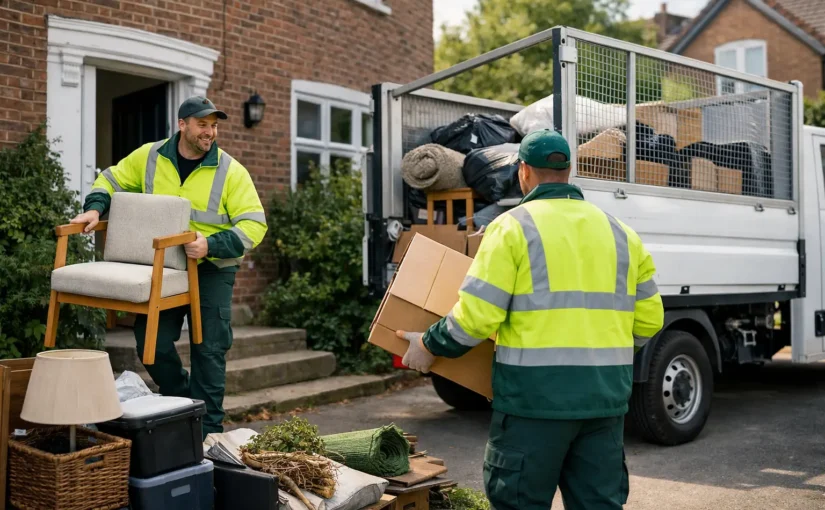
A house clearance in Crouch End is rarely just a matter of taking a few bags outside. It may follow a move, a bereavement, a tenancy change or years of household clutter finally reaching the point where it needs to go. Whatever the reason, the job can feel heavy before a single item has been lifted. A prompt, professional clearance team removes that pressure by doing the loading, sorting and responsible disposal for you.
Mullarkey’s Clearances provides practical household clearances across Crouch End, including the streets around The Broadway, Crouch Hill and Priory Road. We know that access, parking and shared entrances can make a simple clear-out more complicated than it first appears. Our team plans the collection around the property and removes unwanted items with care, leaving you with usable space rather than a pile of work.
When a house clearance is the sensible option
A full clearance is useful when there is more to remove than a normal bin collection or a couple of recycling trips can handle. This includes clearing a whole house or flat, an attic, cellar, garage, shed or several rooms at once. It is also a practical choice for landlords and managing agents who need a property cleared between tenancies without delaying decorators, cleaners or new occupants.
Crouch End has a mix of Victorian homes, converted flats and properties with narrow staircases or limited outside space. Carrying bulky furniture down several flights, arranging a skip permit or making repeated trips to the tip can turn into a drawn-out job. With a hands-on collection, there is no skip blocking the road and no need for you to lift heavy items yourself.
It does not always have to be a complete empty-property clearance. If one room has become unmanageable, you are downsizing, or you need to remove old furniture before a refurbishment, a part clearance can be more cost-effective. The right service depends on the volume of waste, access to the property and the type of items being removed.
What can be removed from a Crouch End property
Most non-hazardous household waste can be collected during a house clearance. That commonly means unwanted sofas, beds, wardrobes, tables, chairs, mattresses, white goods, boxes of bric-a-brac, clothing, toys, carpets and general rubbish. Old garden furniture, broken tools and items from a garage or shed can often be added to the same booking where access allows.
Electrical items need responsible handling too. Televisions, computers, microwaves, fridges and other unwanted appliances should not be left on the pavement or put in general waste. A licensed clearance company can take them away for the correct disposal route, helping to keep reusable materials in circulation where possible.
Some items need to be discussed before collection. Paint, chemicals, gas bottles, clinical waste, asbestos and other hazardous materials may require specialist arrangements. Being clear about these items when requesting a quotation avoids surprises on the day and ensures the work is handled legally and safely.
A straightforward way to clear your home
The process should be simple. Start by identifying the rooms, items or areas you want cleared and take a few clear photographs if possible. Images help a clearance company assess the likely load size, the number of team members needed and whether there are access issues such as stairs, a tight hallway or a lack of nearby parking.
Once you have received a free quotation, agree a collection time that works around you. Same-day availability can be helpful when a tenancy deadline, sale completion or contractor visit is approaching, while scheduled collections suit customers who need time to sort personal belongings first.
On the day, the team confirms what is being removed, loads the items and sweeps up the immediate area afterwards. You do not need to hire a skip, guess how much space to order or spend a weekend carrying furniture to a recycling centre. For a busy household, that difference matters.
Keep personal and sentimental items separate
Before any clearance begins, put aside paperwork, keys, photographs, jewellery, medication and anything you may need later. Where a house is being cleared after a family bereavement, it is often best to work room by room and allow enough time for relatives to check items. A good clearance team works to your instructions, but deciding what stays is always easier before removal starts.
If items are still useful, consider setting them aside for family, friends or charity donation where appropriate. Not every old item has a second life, especially if it is damaged, unsafe or heavily worn, but separating obvious keepers and donations can reduce uncertainty on collection day.
Why licensed waste disposal matters
The person or company that removes your rubbish is responsible for where it ends up. Choosing an unlicensed operator can lead to fly-tipping, and householders may face consequences if their waste is traced back to them. A cheap cash-only offer with no paperwork can become expensive if rubbish is dumped in a local lane or green space.
Using a licensed waste carrier gives you reassurance that the collection is being handled properly. Ask for confirmation of waste carrier credentials and retain any relevant collection paperwork. This is particularly worthwhile for landlords, estate agents and businesses that need a clear record of responsible disposal.
Responsible house clearance is not about sending everything straight to landfill. Materials are sorted where practical so that recyclable waste and suitable items can be directed through appropriate channels. The exact outcome depends on the condition and material of each item, but careful sorting is a far better approach than treating every load as general rubbish.
The practical alternative to skip hire
A skip can work well for a long renovation where builders are producing waste over several days. For a house clearance, however, it is often not the easiest route. You still have to load it, large items may need breaking down, and a permit may be needed if it sits on the road. It can also be inconvenient in parts of Crouch End where parking is already tight.
A man-and-van style clearance service is more flexible for unwanted household contents. The team does the lifting, the vehicle is loaded and removed on the same visit, and you pay for the amount of waste collected rather than hiring an empty container for a fixed period. For a single-day clear-out, that can save both time and hassle.
Preparing for a smoother collection
You do not need to bag every item or dismantle every wardrobe before the team arrives. However, clear instructions make the visit quicker and reduce the chance of something being taken by mistake. Label items that are staying, especially where rooms contain a mixture of old and new furniture.
Where possible, reserve a parking space or let the team know about loading restrictions, controlled parking hours and access codes. Tell them if there are internal stairs, a lift that is out of service, a basement entrance or a long walk from the property to the vehicle. These details help provide an honest quotation and ensure the right team arrives prepared.
For flats, it is sensible to check any building rules about moving bulky items through communal areas. Protecting walls, floors and entrances is part of a careful service, but advance notice can make the process easier for neighbours and building managers too.
Get your space back without the heavy lifting
Whether you are clearing one crowded room or an entire property, the aim is simple: remove what you no longer need quickly, lawfully and with as little disruption as possible. House clearance should give you breathing room, not another difficult job to manage.
Request a free quotation for your Crouch End clearance, explain what needs to go and any access details, and arrange a collection time that suits your schedule. With a reliable team doing the physical work and responsible disposal taken seriously, you can focus on the next step for the property.