
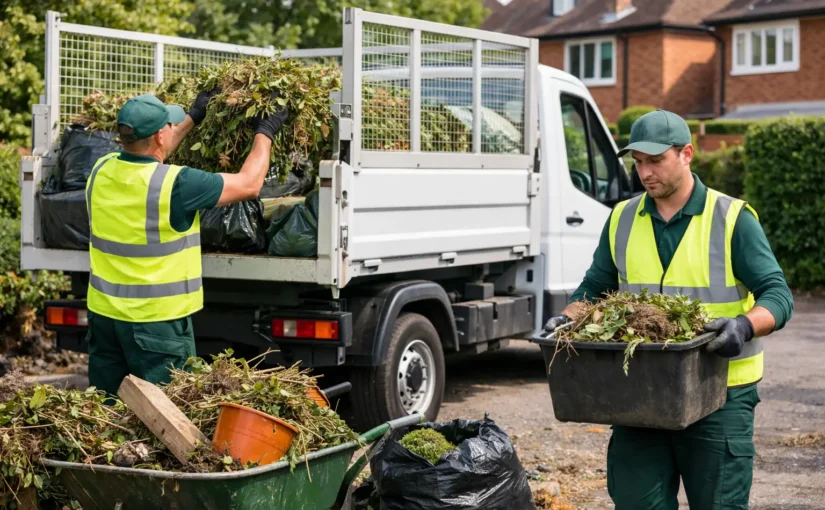
A cleared garden can quickly become a pile of branches, bags of cuttings and an old shed panel that will not fit in the car. Knowing how to remove garden waste properly saves repeated trips, avoids fly-tipping risks and gets your outdoor space usable again. For households and landlords in Muswell Hill, the best option depends on the amount of waste, access to the property and how quickly it needs to go.
Start by separating the garden waste
Before arranging a collection, take ten minutes to separate reusable material from general garden rubbish. It makes disposal simpler and can reduce the volume that needs removing. Grass cuttings, leaves, hedge trimmings and untreated small branches are usually suitable for composting or a local green-waste collection.
Other items need a different route. Broken garden furniture, plastic pots, damaged fencing, soil bags, old barbecues and shed timber should not be mixed blindly with green waste. A professional clearance team can sort suitable materials for recycling and take the rest to an authorised facility.
If you are clearing a neglected garden after a tenancy, sale or renovation, it is common to find a mixture of household rubbish and outdoor waste. Do not assume every item can go in a garden bin. Black bags may contain general waste, and old paint, weedkiller, oils or chemicals need careful handling rather than being left at the kerb.
Choose the right way to remove garden waste
There is no single best answer for every garden. A few bags of leaves call for a different solution from a complete garden clearance following landscaping work.
Compost what you can use
Composting is practical for regular, small amounts of natural material. Leaves, grass cuttings, vegetable peelings and soft plant trimmings can become useful compost for beds and borders. Avoid putting diseased plants, invasive weeds with seeds, pet waste, treated timber or large woody branches into a home compost bin.
Composting is low-cost, but it takes space and patience. It will not help when you have several years of overgrowth to clear or a large pile of mixed materials after cutting back a garden.
Use council collections for manageable loads
A council garden-waste service can suit households with a regular supply of green material. Check exactly what is accepted, how collections are booked and whether there is a subscription or bag requirement. These services are generally intended for routine garden upkeep, not bulky items or large one-off clear-outs.
You may also be able to use a household recycling centre. This can be economical if you have suitable transport, time and only a modest load. In Muswell Hill, however, parking, loading and multiple trips can turn a supposedly simple job into a full weekend. Larger quantities may require a van, and disposal rules can differ for trade waste or hired vehicles.
Book a garden clearance for large or mixed waste
A hands-on collection is often the most straightforward choice when waste is bulky, mixed or difficult to move. Rather than hiring a skip and doing the lifting yourself, a clearance team can load the material from the garden, side passage, garage or front drive and leave the area tidy.
This is especially useful for properties with narrow access, steps, shared entrances or limited parking. It also avoids having a skip sitting outside while you slowly fill it. You pay for the waste removed and the labour required, rather than guessing the right skip size in advance.
What a professional garden clearance can take
Garden clearance is not limited to hedge cuttings. Subject to an assessment of the load, professional removal can deal with a broad range of outdoor materials, including:
- branches, logs, leaves, turf, soil and green cuttings;
- broken fences, gates, trellis, decking and untreated timber;
- garden furniture, planters, tools, toys and plastic pots;
- old sheds, greenhouses, garden storage and general rubbish.
Some items require separate arrangements. Asbestos, gas bottles, chemicals, paint, oils, batteries and electrical equipment should always be declared when requesting a quote. This protects the collection team, ensures the correct disposal route and prevents surprise costs on the day.
A practical plan for clearing a garden quickly
Start at the far end of the garden and work towards the exit. Create one pile for green material, another for bulky items and a separate area for anything that may need special handling. This gives you a clear picture of the job and makes it easier to describe when asking for a quotation.
Do not spend hours bagging every branch if you are booking a collection service. Loose cuttings can often be loaded directly, and long branches are easier to handle before they are forced into small bags. If you can safely cut large branches down to a manageable length, that may help, but never take risks with unstable trees, heavy timber or tools you are not confident using.
Make access clear where possible. Move cars from the drive, unlock side gates and let the team know about stairs, low archways, controlled parking or shared access. These details help a professional service arrive with the right vehicle and enough labour, keeping the visit prompt and efficient.
For landlords and managing agents, photographs are useful before and after the clearance. They provide a simple record of the condition of the outdoor space, particularly at the end of a tenancy or before contractors begin repair work.
Why licensed disposal matters
Garden waste may look harmless, but responsibility does not end when it leaves your property. If rubbish is handed to an unlicensed collector and later dumped illegally, the householder or business that produced it can face questions and potential penalties.
Always use a properly licensed waste carrier and ask for confirmation that the material will be handled responsibly. A reputable company will be clear about what it can take, provide an honest quotation and transport waste to authorised recycling or disposal facilities. Recyclable wood, metal, green waste and suitable plastics can be separated rather than simply treated as one mixed load.
Choosing licensed collection also protects your neighbourhood. Fly-tipped bags and broken fencing spoil streets, block paths and attract further dumping. It is not a shortcut worth taking.
Garden waste removal in Muswell Hill without the skip hassle
Many gardens in Muswell Hill have character, but that can mean tight side passages, sloping plots and limited room for a skip. A flexible collection service is often a better fit. The team does the lifting, loads the lorry and removes the waste in one visit, so you can get on with planting, repairs or preparing the property for new tenants.
Mullarkey’s Clearance provides prompt, professional garden clearance across North London, with same-day and scheduled appointments available where capacity allows. Whether it is a few bulky garden items or a full overgrown-garden clearance, the job is assessed clearly and priced fairly before work begins. The focus is simple: minimise disruption, handle waste legally and recycle wherever possible.
When to arrange collection
Book early if your garden work is tied to a property deadline, landscaping appointment or tenancy handover. Spring and autumn clear-outs can generate more material than expected, while wet weather makes bags heavier and access messier. If you need the space cleared quickly, describe the load accurately and include photos when requesting a quote.
A garden should be somewhere you can use, not a storage area for old timber and overflowing bags. Request a free quotation when the pile starts getting in the way, and let a licensed local team take care of the lifting and responsible disposal.