
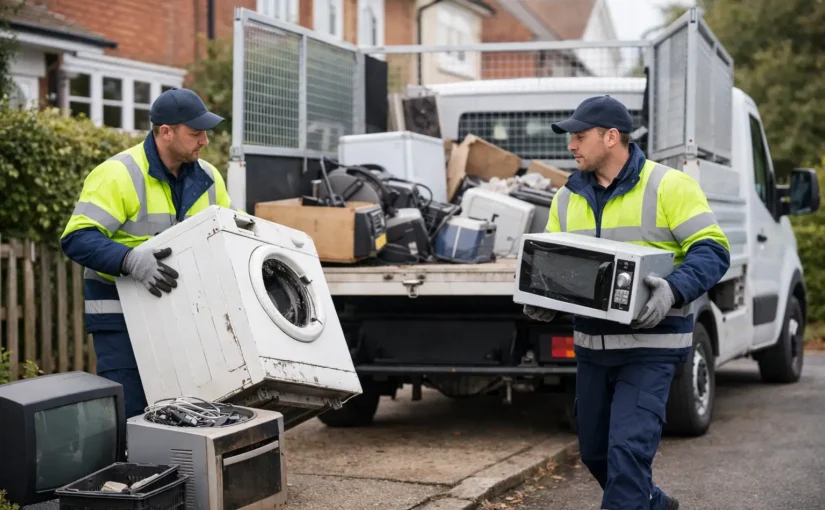
A broken washing machine can block a kitchen doorway for weeks. An old fridge left beside communal bins can create a problem for both residents and managing agents. If you have searched for “how to dispose broken appliances”, the practical answer is to keep the item out of general rubbish and arrange a proper collection or recycling route.
For households, landlords and small businesses in Muswell Hill, appliance disposal is rarely as simple as putting something on the pavement. Many items contain electrical components, refrigerant gases, oils, batteries or materials that need separating before recycling. Using a prompt, professional clearance service avoids the lifting, the uncertainty and the risk of an illegal fly-tip.
How to dispose of broken appliances safely
The right method depends on the appliance, its size and whether it contains hazardous components. A kettle, toaster or microwave is very different from a fridge-freezer, cooker or washing machine. The common rule is simple: do not put electrical appliances in your household wheelie bin, and do not leave them by a bin store or on the street unless a confirmed council collection allows it.
Small electricals may be accepted at designated recycling points, while larger appliances usually need a booked collection, a retailer take-back arrangement or transport to a household recycling centre. That works well if you have a suitable vehicle, enough time and help to load heavy equipment safely. It can be less convenient on the hills and narrow residential streets around Muswell Hill, particularly when a bulky item needs carrying down stairs from a flat.
A licensed electrical waste removal team can collect appliances directly from the property, load them onto the lorry and take them for appropriate sorting and recycling. This is often the simplest option when you have more than one item, no access to a car, or a tight deadline before a tenancy change, refurbishment or new appliance delivery.
Identify the appliance before arranging removal
Before booking a collection, check what you are getting rid of. This helps ensure it is handled correctly and makes a quotation more accurate. Fridge-freezers, air-conditioning units and some dehumidifiers require particular care because they may contain refrigerant gases. They should never be dismantled at home or broken up for parts.
Washing machines, dishwashers and tumble dryers are heavy and may still contain water. Turn off the supply, disconnect the appliance if it is safe to do so, and drain hoses where possible. Keep the machine upright during removal to reduce leaks. If you are not confident disconnecting plumbing or electrics, ask a qualified tradesperson first.
For cookers, ovens and hobs, do not attempt to disconnect a gas appliance yourself. A Gas Safe registered engineer should isolate it before collection. Once it is safely disconnected, a clearance team can remove it along with packaging, old cabinets or other renovation waste if needed.
Smaller appliances such as irons, hoovers, fans, coffee machines, microwaves and televisions should be kept dry and placed together for collection. Remove loose batteries from remotes, cordless tools and similar items, as batteries need their own recycling route and can become a fire risk when damaged.
Prepare your appliance for collection
A few minutes of preparation makes removal quicker and protects your home. Empty fridges and freezers completely, wipe up spills and defrost them in advance where possible. Food waste left inside a fridge-freezer creates unpleasant odours and can delay recycling.
Check washing machines, dishwashers and refrigerators for personal items, documents, magnets and shelves you want to keep. If a device stores data, such as a smart television, printer or office machine, reset it and remove memory cards or storage media. Businesses should take particular care with equipment that may hold customer or staff information.
Clear a path from the appliance to the entrance. In converted houses and upper-floor flats, tell the clearance company about stairs, restricted access, parking limitations or a lift that is too small for the item. This allows the team to plan the safest route and bring the right handling equipment. It also helps prevent avoidable delays on collection day.
Why kerbside dumping is not an option
Leaving a broken appliance outside may feel like a quick fix, but it can result in fly-tipping if it is not part of an authorised collection. Appliances left on pavements can obstruct pushchairs and wheelchairs, attract additional rubbish and cause damage if scavengers remove parts. Fridge doors and sharp metal edges also pose a safety risk.
Passing an appliance to an unlicensed collector is another false economy. If your waste is dumped illegally, you could still be questioned about where it came from. A legitimate waste carrier should provide clear collection details and take responsibility for transporting rubbish to an authorised facility.
Mullarkey’s Clearance provides a dependable alternative for North London customers who need bulky electrical items removed without hiring a skip or struggling with a recycling centre visit. The team can collect from inside or outside the property, subject to safe access, and aims to recycle suitable materials wherever possible.
Recycling broken appliances: what happens next?
Appliances are commonly treated as waste electrical and electronic equipment. At an authorised recycling facility, items can be assessed, dismantled and separated into useful materials such as steel, aluminium, copper, plastic and glass. Some appliances also have components that require controlled treatment rather than ordinary disposal.
This is why responsible removal matters. A broken appliance may no longer be useful in your kitchen, office or rental property, but it can still contain valuable resources. Recycling reduces the amount sent to landfill and supports a more sensible use of materials.
Not every appliance is beyond repair, however. If the fault is minor and the item is safe, a repair may be cheaper and less wasteful than replacement. This depends on the age of the appliance, the availability of parts and its energy efficiency. An older fridge-freezer with poor efficiency may cost more to run than it is worth repairing, while a newer washing machine with a simple pump fault could be worth fixing.
When a clearance service is the best choice
A dedicated collection is particularly useful when appliance disposal is part of a bigger job. Landlords clearing a flat after a tenancy, families replacing several white goods, and local businesses upgrading staff kitchen equipment can have appliances removed alongside furniture, packaging, general rubbish and office waste.
It is also a practical option when timing matters. A new washing machine arriving tomorrow leaves little room for an old one in a compact Muswell Hill kitchen. Instead of moving heavy equipment to the pavement or paying for a skip that takes up parking space, you can arrange a collection that fits around your schedule.
Pricing should reflect the type and volume of waste, access, labour needed and any specialist handling required. Be clear about every item when requesting a quotation, including whether there are fridge-freezers, gas appliances, stairs or difficult parking. Honest information at the start helps avoid surprises and allows for a fairer price.
Questions people ask about appliance disposal
Can I put a broken microwave or toaster in the normal bin?
No. Electrical items should not go in your general household bin. Keep them separate and use an electrical recycling point or arrange a collection.
Can a broken fridge-freezer be collected?
Yes, but it needs specialist handling because of the refrigerant system. Do not damage the pipes or try to take it apart before collection.
Do I need to take the appliance outside first?
Not necessarily. A professional clearance team can often remove items from inside your property, provided there is safe access. Mention stairs, tight turns and parking when you book.
What if I have several items to remove?
Combining broken appliances with other unwanted household or business waste is usually more convenient than arranging separate trips. Describe the full load when asking for a free quotation.
A broken appliance should not become a lingering obstacle in your home or a risk outside it. Arrange responsible removal, keep your property clear and let the materials be handled through the right recycling channels. For fast, affordable collection in Muswell Hill, request a free quotation and choose a service that makes disposal straightforward from the first lift to the final recycling point.