
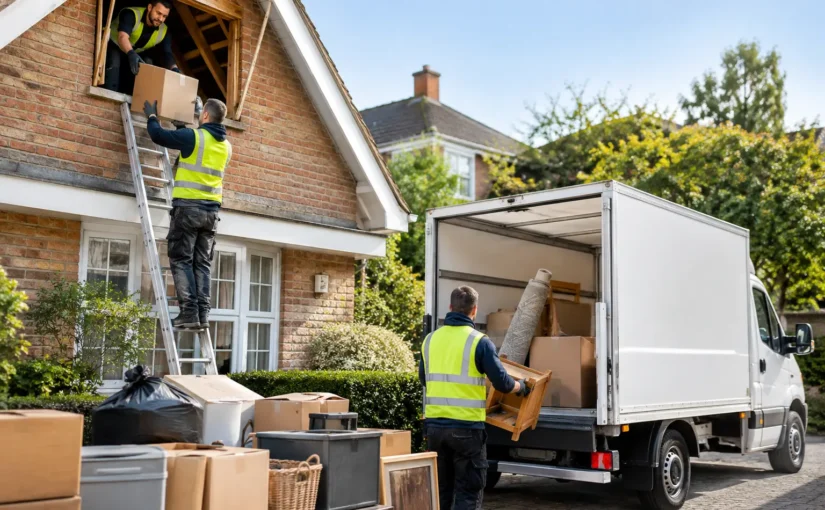
An attic can quietly become the most crowded room in a Hampstead home. Boxes from previous moves, old furniture, children’s belongings, broken suitcases and long-forgotten electrical items often end up in the loft because there is nowhere else to put them. The best attic clearance tips Hampstead households can follow start with a simple rule: do not try to shift years of stored belongings in one rushed afternoon.
A planned clearance protects your property, makes sorting easier and prevents usable items or recyclable materials being thrown away unnecessarily. It also helps you avoid the awkward situation of getting bulky rubbish down a narrow staircase, only to realise your usual bin collection will not take it.
Start with a safe look around
Before bringing anything down, check whether the loft is safe to enter. Many older Hampstead properties have limited headroom, narrow hatches and loft boarding that only covers part of the space. Use a stable ladder, good lighting and sensible footwear. Do not stand between joists or put your weight on insulation, as ceilings are not designed to support it.
Look for signs of damp, loose boards, exposed wiring, pest activity or damaged insulation. If the loft has not been opened for years, dust and debris can be considerable, so gloves and a dust mask are sensible. Take your time around heavy objects, particularly old wardrobes, bed frames and boxes that may have weakened with age.
If access is difficult, or the load is too heavy to move safely, professional help is usually more practical than asking friends to carry items down several flights of stairs. A hands-on clearance team can remove items from the loft and load them directly, saving you the effort of arranging a skip or making repeat trips to the tip.
Sort before you clear
The quickest way to make an attic clearance harder is to empty everything into the hallway without a plan. Create a small working area near the loft hatch or in a spare room, then make decisions item by item. Keep paperwork, photographs and small valuables well away from the rubbish pile.
A good sort normally separates belongings into four groups:
- items to keep, including documents, sentimental possessions and seasonal items you genuinely use;
- items to sell, donate or pass on, such as clean furniture, books, toys and household goods in good condition;
- materials that can be recycled, including cardboard, metal, textiles and certain electricals; and
- rubbish that is broken, contaminated, unsafe or no longer suitable for reuse.
Be realistic about the ‘maybe’ pile. If a box has been unopened since your last move, it may not need to return to the loft. That said, do not dispose of old files, deeds, financial documents or family records until you have checked them properly. Loft clearances often uncover paperwork that needs shredding or storing securely rather than removing.
Best attic clearance tips for Hampstead access issues
Hampstead homes vary widely, from period terraces and mansion flats to converted houses with steep staircases and restricted parking. These details affect how a clearance should be planned. A team may need to carry items through shared entrances, work around residents’ access, or arrange collection at a time that causes minimal disruption.
Measure large items before attempting to bring them down. An old sofa, wardrobe or mattress may have gone into the loft before a stairwell was altered, or it may simply not fit through the hatch. In some cases, careful dismantling is the safest option. Forcing furniture through tight spaces can damage walls, bannisters and door frames, and can turn a straightforward job into an expensive repair.
If you live in a flat, check any building rules for moving bulky waste through communal areas. Let neighbours or the managing agent know if a collection will involve a shared corridor or entrance. Clear access makes the job faster and helps avoid avoidable delays on the day.
Parking also matters. A collection vehicle needs a sensible place to stop while items are loaded. Where on-street parking is limited, it is worth discussing access when requesting a quote. A reliable clearance company will ask the right questions in advance rather than arriving unprepared.
Know what needs separate handling
Not every item in an attic should be treated as general rubbish. Electrical goods, for example, should be handled through an appropriate waste stream. Old televisions, monitors, printers, lamps, cables and small appliances can contain materials that should not go into ordinary household bins.
Paint tins, chemicals, gas bottles, batteries and unknown liquids also need extra care. Do not mix them into bags of general waste, even if the containers appear empty. Set these items aside, describe them clearly when arranging collection and follow the advice of the clearance provider.
Mattresses, carpets and upholstered furniture may require specific disposal routes too. The same applies to heavy building materials if your loft has been used to store old tiles, timber, plasterboard or renovation debris. Being clear about these items when requesting a quotation means the collection can be priced accurately and handled responsibly.
Avoid a skip when the job is indoors
Skip hire can suit some renovation projects, but it is often a poor fit for attic clearance. You still have to carry every bag and item down yourself, and you may need space outside for the skip. In busy residential streets, that can mean permits, parking concerns and a container sitting outside your property for several days.
A rubbish removal service is usually simpler when the waste is already inside the home. The team does the lifting, loading and sweeping-up, while you only need to identify what should go. This is particularly useful for landlords preparing a property between tenancies, families clearing a relative’s home, or homeowners making space ahead of a loft conversion.
The cost depends on the volume and type of waste, the labour involved and the access available. A clear description, photographs where possible and an honest note about stairs or awkward items will help you receive a fair quotation without surprises.
Choose responsible removal, not a fly-tipping risk
Attic clutter can feel like a burden you simply want gone, but choosing the cheapest informal collector can create a much larger problem. If someone disposes of your waste illegally, it may be traced back to you. Always use a properly licensed waste carrier and ask for confirmation that items will be taken to suitable recycling, reuse or disposal facilities.
Responsible clearance is not just about avoiding fly-tipping. Cardboard, metal, wood, textiles and electrical items can often be diverted from landfill when they are sorted and handled properly. Reusable furniture and household goods may also have another life where their condition allows it.
Mullarkey’s Clearances provides prompt, professional attic and household rubbish removal across North London, with flexible booked collections and same-day availability where scheduling permits. The team can do the lifting from your loft, help clear bulky items and ensure waste is handled through licensed, responsible routes.
Make collection day straightforward
Once you have decided what is going, keep the route from the loft to the front door as clear as possible. Move bicycles, shoes and small furniture out of hallways, protect any delicate flooring if needed, and keep pets safely in another room. You do not need to bag every single item, but loose small rubbish is easier to remove when contained in sturdy bags or boxes.
Keep anything you are retaining clearly labelled or in a separate room. This is especially useful where a full house declutter is happening at the same time as the attic clearance. A short walk-through before work begins gives everyone clarity and helps prevent mistakes.
For a free quotation, explain roughly how much is in the attic, whether there are stairs or restricted access, and whether the load includes furniture, electricals or construction waste. A little preparation turns a dusty, difficult loft into useful space again, without leaving you to handle the heavy lifting alone.