
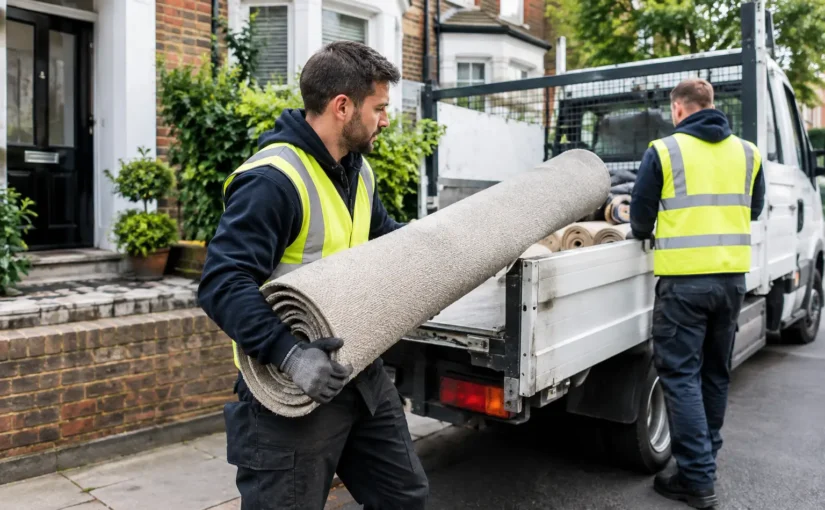
A rolled-up carpet can quickly become the most awkward item left after a refit. It is bulky, dusty, often heavy when wet, and difficult to move through a Kentish Town flat, shared hallway or narrow staircase without marking walls or blocking access. This carpet disposal guide Kentish Town residents can use explains the practical, legal ways to clear unwanted flooring without turning a simple renovation into a bigger job.
Why old carpet needs a proper disposal plan
Carpet is not ordinary household rubbish. Most rolls are too large for a standard bin, while loose pieces of underlay, gripper rods and offcuts can create a mess if they are left in communal areas. Fly-tipping is illegal, and placing carpet beside bins or on the pavement can lead to complaints, missed collections and possible enforcement action.
The right approach depends on how much flooring you have, its condition and how easily it can be removed from the property. A small, dry offcut may be manageable as part of a household waste trip. A full room of carpet, however, is usually better handled by a professional collection team, especially if furniture, underlay and old flooring accessories also need to go.
For landlords and managing agents, prompt removal also helps keep a void property presentable between tenancies. For homeowners, it means the new flooring can be fitted without old materials taking over the hall or garden.
Carpet disposal guide Kentish Town residents can follow
Start by deciding whether the carpet can genuinely be reused. A clean, modern carpet with plenty of life left in it may be suitable for reuse in a shed, workshop or another room. It may also be worth asking local community projects or charitable organisations whether they can accept it. Many will not take used carpet because of hygiene, storage and fire-safety requirements, so always check before transporting it.
If reuse is not realistic, the next step is to separate the materials where practical. Carpet, underlay, wooden gripper rods, metal door bars and packaging do not always follow the same disposal route. You do not need to spend hours dismantling everything, but removing obvious metal strips and keeping sharp gripper rods together can make the collection safer and more efficient.
Roll the carpet tightly and secure it with tape or twine. Avoid making rolls so heavy that they cannot be lifted safely. Large carpets can be cut into manageable lengths with a suitable utility knife, but take care around gripper rods, which are sharp and easy to miss under the edge of the flooring. Wear gloves and clear the room before cutting.
If the carpet is damp, mouldy or affected by a leak, do not store it indoors while waiting for removal. Wet carpet becomes substantially heavier and can develop unpleasant odours quickly. Tell your clearance provider about its condition when requesting a quotation so the team can bring the right equipment and plan the collection properly.
Your main options for getting rid of old flooring
Taking carpet to a household waste and recycling centre can suit a small DIY job if you have suitable transport, can lift the rolls safely and have checked the site’s current rules. It is less convenient when you live in a flat, do not have access to a vehicle or are clearing several rooms at once. Parking, loading and unloading can turn a supposedly cheap option into a long day.
Hiring a skip may make sense for a major refurbishment with substantial building waste. For one or two carpets, though, it can be poor value. You need space for the skip, may need permission if it sits on the road, and still have to carry the flooring outside yourself. In busy parts of NW5, access and parking can make this particularly awkward.
A licensed rubbish removal service is often the straightforward choice for carpet, underlay and related waste. The team does the lifting, carries items from the room or property, loads the vehicle and takes the material for responsible processing. It is a useful option for occupied homes, rental properties, offices and shops where disruption needs to be kept to a minimum.
Can carpet be recycled?
It depends on the type of carpet and its condition. Some carpet materials can be separated and recycled through specialist routes, but mixed fibres, heavy contamination, adhesive, wet backing and attached underlay can limit what is possible. This is why a responsible clearance company should never promise that every carpet will be recycled in full.
The better aim is to keep as much material as possible out of landfill through sorting, reuse where appropriate and established recycling or recovery facilities. Choosing a licensed carrier matters because they have a legal duty to handle and transfer waste correctly. If someone offers an unusually cheap cash-only collection but cannot show that they are authorised to carry waste, the risk remains with the person who hired them if the carpet is later dumped illegally.
Ask for confirmation that your waste will be removed responsibly. Clear pricing, a defined collection time and proper paperwork are signs that you are dealing with a professional operator rather than an unaccountable man-with-a-van service.
What affects the cost of carpet removal?
Carpet disposal costs are normally based on volume, weight, access and the type of waste being collected. A single rolled carpet from a ground-floor home is a very different job from several heavy rolls, underlay, furniture and renovation debris coming down three flights of stairs.
Access is particularly relevant in Kentish Town. Restricted parking, controlled zones, tight entrances and shared stairwells can all affect how long a collection takes. Giving accurate details at quotation stage helps avoid surprises. Let the provider know the number of rooms, approximate carpet sizes, floor level, lift access, parking arrangements and whether other items need clearing at the same time.
It is usually more cost-effective to remove associated items in one visit. Old wardrobes, broken beds, damaged laminate, bags of offcuts and unwanted furniture can often be collected alongside the carpet, saving you from arranging several separate jobs.
Preparing for a prompt collection
A little preparation makes removal safer for everyone and helps the team work quickly. Move personal belongings, ornaments and valuables out of the area. If furniture is staying, create a clear path from the room to the front door. Keep children and pets away from the work area, particularly where gripper rods or cutting tools are involved.
If you are a tenant, check your tenancy agreement before removing fitted flooring. Some landlords require approval for alterations, while others may want the original carpet left in place. Where a landlord has agreed to replacement, take photographs before work starts and retain written confirmation. It can prevent a deposit dispute later.
For landlords and property managers, arrange collection as soon as flooring is lifted. Leaving rolls in communal halls or outside a building is not a safe holding solution, and it can create a poor first impression for incoming tenants.
A practical alternative to skip hire
Mullarkey’s Clearance provides prompt and professional carpet collection across Kentish Town, with same-day availability where scheduling permits. Our team can remove old carpet, underlay, gripper rods and other unwanted items directly from your property, so you do not need to hire a skip, handle heavy rolls or make repeated trips to a waste site.
We provide clear quotations based on the job, careful handling around your home or business premises, and licensed waste disposal with recycling considered wherever possible. Whether you are replacing one bedroom carpet, clearing a rental flat or completing a larger refurbishment, the focus is simple: efficient removal, fair pricing and minimal disruption.
Request a free quotation with the number of carpets, their approximate size and a few details about access. A properly planned collection gets the old flooring out of the way quickly, leaving you with the space and clean start your property deserves.