
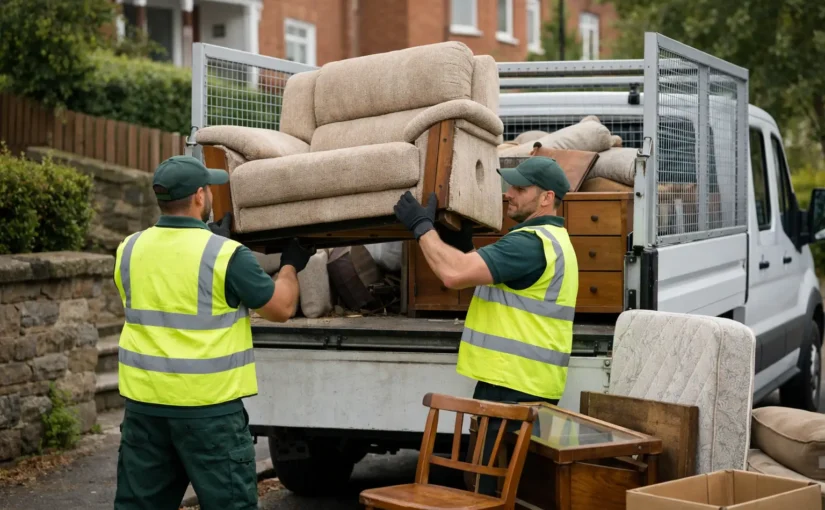
A worn-out sofa, damaged wardrobe or unwanted bed frame can take over a room quickly – especially in Highgate homes and flats where storage and parking are often limited. If you are wondering how to dispose old furniture without dragging it to the tip, risking an illegal fly-tip fine or hiring a skip you do not need, there are several practical options.
The right route depends on the furniture’s condition, how much there is to remove and how quickly you need the space back. A usable item may suit donation or resale. Broken, bulky or heavily worn furniture usually needs a licensed collection service that can remove it safely and send suitable materials for recycling.
Start by checking whether the furniture can be reused
Before arranging disposal, look honestly at the condition of each item. A solid wood chest of drawers with a few scratches is very different from a collapsed sofa, water-damaged chipboard unit or mattress that has reached the end of its life.
Furniture that is clean, safe and structurally sound may be worth offering to a charity, local community group or buyer. Clear photographs and accurate measurements help if you are selling or giving an item away. Be upfront about marks, missing handles and access issues, particularly if collection involves stairs in a Highgate property.
Upholstered furniture needs extra care. Sofas, armchairs and some padded items should have a permanent fire-safety label if they are being donated or sold. Without the correct label, many charities and reuse organisations cannot accept them. If the upholstery is torn, stained, infested or heavily damaged, responsible disposal is normally the sensible option.
Do not leave furniture on the pavement with a note saying “free”. It can block access, become fly-tipping if no one takes it and leave you responsible for a complaint or enforcement action. Arrange a proper handover instead.
How to dispose old furniture when it cannot be reused
For furniture that is damaged, too large to transport or simply no longer wanted, you generally have three choices: take it to a recycling centre, use the local authority bulky waste service, or book a private rubbish clearance company.
Taking items to a recycling centre can cost less if you have a suitable vehicle, enough time and help with lifting. However, it is rarely straightforward for a three-piece suite, a large wardrobe or several items from a full house clearance. You may need to dismantle furniture, protect your car, load it safely and check the site’s booking and access rules before travelling.
Council bulky collections can work well when your timescale is flexible and you only have a small number of items. The drawbacks are fixed collection dates, restrictions on what can be left out and the need to move everything outside yourself. For residents without ground-floor access, that can mean carrying heavy furniture down narrow staircases or through shared hallways.
A licensed clearance service is often the most convenient option when access is difficult, the item is too heavy to manage or you need it gone promptly. The team does the lifting, loading and transport, so there is no skip sitting outside your home and no need to make repeated trips to a tip.
Why a skip is not always the best answer
A skip can be useful for a major renovation with a steady flow of mixed waste. For old furniture alone, it often creates more work than it saves. You still have to carry every item outside and lift it into the skip, and arranging a permit may be necessary if it needs to sit on the road.
Highgate’s hilly streets, controlled parking and tight access can make skip delivery awkward. A clearance team can usually assess the furniture where it is, carry it out carefully and load it directly onto the vehicle. This keeps disruption to neighbours and passers-by to a minimum.
It can also be better value. With a clearance collection, you pay for the space your items take up and the work involved, rather than paying for an oversized container that may sit half-empty for days.
Prepare furniture for a smooth collection
A little preparation helps make removal quicker and protects your belongings. Empty all drawers, cupboards and storage compartments first. It is surprising how often keys, paperwork, chargers and personal items are left inside an old sideboard or divan base.
If possible, take detachable legs off tables and sofas, remove loose shelves and secure doors or drawers. There is no need to dismantle everything if you are unsure how – forcing old fittings can create sharp edges or damage walls – but letting the collection team know about oversized pieces is helpful.
Measure large furniture and the tightest points on its route out, such as stairwells, doorways and lifts. Tell the company in advance if there are several flights of stairs, restricted parking, a gated entrance or a particularly heavy item. Clear information allows the right number of operatives and suitable vehicle space to be arranged.
For safety, keep children and pets away from the removal route. If you are a landlord or managing agent, make sure the team has permission to access communal areas and that tenants know when the collection is due.
Choose a licensed waste carrier
The person who takes your furniture away has a legal responsibility to dispose of it correctly, but so do you. Using an unlicensed operator may appear cheap until the waste is dumped on a lane, verge or estate, with evidence traced back to the original owner.
Ask whether the company is a registered waste carrier and whether it provides documentation for the collection. A professional operator should be clear about pricing, explain what is included and handle your property respectfully. Be cautious of vague cash-only offers, businesses with no identifiable details or anyone who suggests leaving items outside overnight without a booked collection.
Responsible disposal is more than taking furniture away. Where practical, materials such as metal, timber and some textiles can be separated for recycling. Items that cannot be reused still need to go through the appropriate waste routes rather than being dumped or burned.
What a professional furniture clearance includes
Mullarkey’s Clearances provides a prompt and professional furniture disposal service for households, landlords and businesses across North London, including Highgate. Whether you have one unwanted armchair or a property full of bulky items after a move, refurbishment or tenancy change, the focus is on making the job simple.
Once you request a free quotation, explain what needs removing and share photographs where possible. This helps provide an honest estimate and identify any access requirements. On collection day, the team can remove furniture from rooms, lofts, garages, offices or communal storage areas, then load it for responsible disposal.
This hands-on approach is particularly useful after a house sale, bereavement clearance, end of tenancy or office refresh, when there are many other jobs competing for your attention. You do not need to hire a van, find parking at a recycling centre or ask friends to wrestle a wardrobe down the stairs.
Common furniture disposal questions
Can old mattresses be removed with furniture?
Yes, mattresses can usually be collected alongside beds, sofas and other household furniture. Keep them dry until collection where possible, as wet or heavily soiled items may be harder to handle and recycle.
Can furniture be collected from an upstairs flat?
Yes, provided the access details are given in advance. Mention the floor level, lift availability, narrow staircases and any parking limitations when requesting your quote. This allows the collection to be planned properly.
Do I need to put furniture outside first?
Not with a full clearance service. The advantage is that trained operatives can remove items from inside the property, saving you the heavy lifting and reducing the risk of damage to walls, doors or communal areas.
What if I have other rubbish at the same time?
It is usually more efficient to clear it in one visit. Old furniture can be collected with unwanted household items, bagged rubbish, electrical items, garden waste or renovation debris, as long as you describe everything accurately when booking.
If old furniture is taking up valuable space, do not let it become a bigger problem by leaving it in a hallway, garden or on the pavement. Request a free quotation, choose a collection time that works for you and get your Highgate property clear again with minimal fuss.