
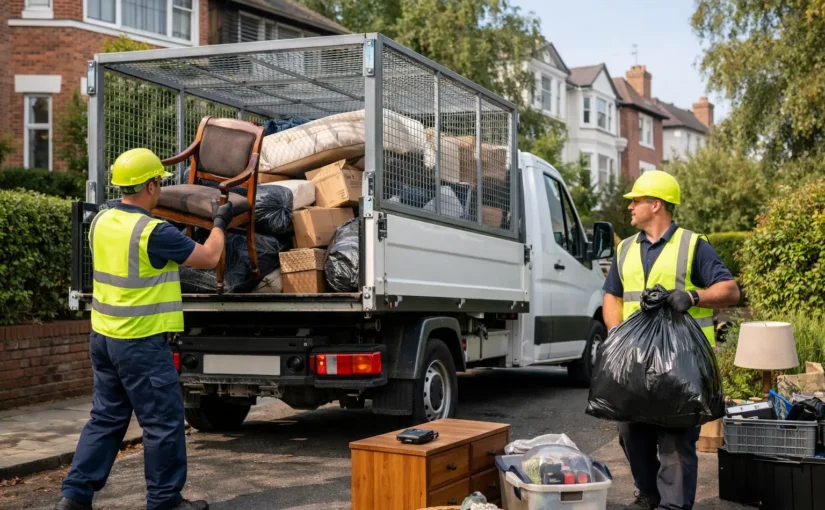
Clearing a home after a bereavement is rarely just a practical job. A probate house clearance Hampstead service should give families, executors and solicitors breathing room: a clear plan for removing unwanted contents without rushing decisions or leaving a property in a worse state than it was found.
In Hampstead, many probate properties are period houses, mansion flats and homes with restricted access, stairs or controlled parking. That can make skip hire inconvenient and burdensome. A hands-on clearance team can remove items directly from the property, load them safely and leave the rooms swept through, so there is less for you to arrange at an already demanding time.
Start with the right order of decisions
Before any clearance takes place, make sure the executor or person authorised to deal with the estate has confirmed what can be removed. Probate does not always mean that every item in a house is unwanted. Family members may need time to identify photographs, paperwork, jewellery, personal keepsakes or documents relevant to the estate.
It is sensible to carry out an initial walk-through and set aside anything that needs checking. Look in drawers, filing cabinets, loft storage, bedside tables and the pockets of furniture before a collection is booked. Important documents can be surprisingly easy to miss, including wills, insurance papers, bank correspondence, share certificates and property records.
Once the keep, sell, donate and remove decisions have been made, the physical clearance becomes much more straightforward. A professional team can deal with the removal work, but they should not be expected to value antiques, administer the estate or decide what has sentimental or financial value. If there are items you believe may be valuable, arrange an appraisal before they are collected.
What a probate house clearance in Hampstead can include
Every property is different. Some homes need a few unwanted pieces of furniture removed before sale, while others require a full clearance after many years of occupation. The best approach is to describe the job honestly when requesting a quote, including the number of rooms, floors, access arrangements and any particularly heavy items.
A typical probate clearance may include household furniture such as wardrobes, sofas, beds, tables, chairs and bookcases. It can also cover bagged household rubbish, carpets, curtains, kitchen contents, clothing, ornaments, books, electrical items and garage or loft clutter. Where required, outdoor items such as broken garden furniture, tools, pots and green waste can be removed as part of the visit.
Some materials need extra care. Fridges and freezers, televisions, computer equipment and other electricals must be handled through appropriate waste routes. Paint, chemicals, gas bottles, asbestos and other potentially hazardous materials should be declared before booking, as they may need a specialist collection or cannot be taken in a standard load. Being upfront avoids delays on the day and helps keep everyone safe.
Full clearance or a staged collection?
A full clearance is often the most efficient choice when a property has been checked, the family has agreed what is staying, and the home needs to be prepared for cleaning, letting or sale. It avoids repeated visits and gives estate agents, cleaners or tradespeople a clear space to work with.
However, a staged collection can be better where relatives live outside London, where paperwork still needs sorting, or where the house is occupied by a tenant or family member. Removing bulky furniture first can make a home safer and easier to assess, while giving everyone time to make careful decisions about smaller personal items. There is no benefit in clearing quickly if it creates regret later.
Why local access planning matters in Hampstead
Hampstead clearances often involve details that affect time and cost. Narrow roads, permit-controlled parking, basement flats, upper floors, shared entrances and long walks from the property to the collection vehicle all need to be considered. A clear description, and photographs where helpful, allow a removal team to plan the right number of staff and vehicle space.
If you are managing a flat, check whether the building has rules on lift use, loading times or protecting communal areas. Let your concierge, managing agent or neighbours know if a larger collection is taking place. This is particularly useful where access is tight and the team needs to move furniture through shared hallways.
A proper quote should reflect the amount and type of waste, the labour involved, access and disposal costs. The cheapest figure is not always the most economical option if it excludes labour, cannot handle all items, or leaves you to carry furniture to the kerb. Ask what is included, whether there are items the team cannot take, and how additional waste would be priced if it is found on the day.
A respectful, practical clearance process
The purpose of a probate clearance is not simply to empty rooms. It is to return the property to a manageable condition with as little disruption as possible. That means lifting and carrying heavy items safely, taking care around walls, floors and stairwells, and keeping the work organised rather than creating a pile outside the home.
Mullarkey’s Clearance provides a prompt and professional alternative to hiring a skip for probate properties across Hampstead. The team can collect from inside the property, saving you the work of moving heavy furniture or arranging a permit and reserving space on the road. Same-day availability may be possible for smaller, urgent collections, while planned appointments suit larger clearances that need family coordination.
On the day, keep clearly marked items that are not to be removed in one room or area where possible. If this is not practical, labels on furniture and boxes are useful. Make sure the team has a contact person who can answer questions, particularly if access is being provided by an estate agent, solicitor or key holder.
After removal, the property should be left clear of the agreed contents. A clearance is not the same as a deep clean, decorating service or property refurbishment, so it is worth arranging those separately if the home is being placed on the market. Clearing comes first because it reveals the true condition of rooms, flooring and storage areas.
Responsible disposal is part of the service
When people are dealing with probate, it is understandable that they want unwanted contents gone quickly. But speed should not mean a careless disposal route. Using a licensed waste carrier helps protect the estate and gives reassurance that rubbish is being handled lawfully rather than fly-tipped.
Reusable items may be directed towards appropriate reuse channels where practical, while recyclable materials are separated as far as facilities allow. The exact outcome depends on the condition of items, contamination, safety requirements and local disposal options. A damaged sofa or broken electrical item may not be suitable for reuse, but it should still be processed responsibly.
Avoid relying on an unverified collector offering a cash-only bargain. If waste is dumped illegally and can be traced back to the property, the person who arranged the collection may face difficult questions. Professional removal, clear communication and responsible disposal are worth prioritising, especially when executors have duties to the estate.
Questions families often ask
Do we need to be at the property during the clearance?
Not always. If authority, access and a clear removal list have been agreed in advance, a representative such as an executor, estate agent or solicitor can arrange entry. For a first clearance, it is often helpful for someone familiar with the contents to be present or available by phone.
Can furniture be removed from an upper-floor flat?
Yes, provided access has been explained in advance. Stairs, lifts, tight turns and parking distance may affect the labour needed, but experienced clearance teams can plan around these practical issues.
How quickly can a probate property be cleared?
It depends on the volume, access and whether decisions about contents are complete. A small collection may be dealt with quickly, whereas a full house with lofts, garages and years of stored belongings needs more planning. Requesting a free quotation early gives you a realistic timescale.
If you are facing a probate clearance in Hampstead, take the pressure off the physical work first. Set aside what matters, confirm what can go, then ask for a free quotation from a licensed local team that will remove the agreed contents carefully and responsibly.