
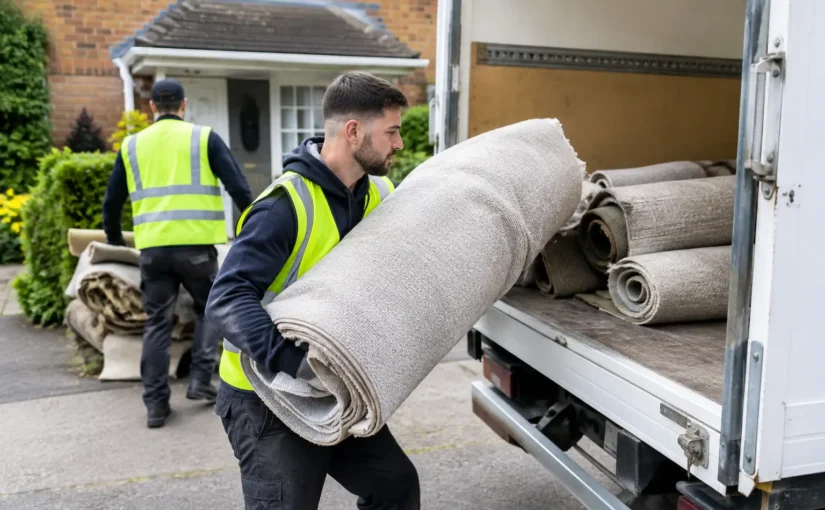
A worn carpet can make a whole room feel ready for a change, but it becomes a difficult item the moment it is rolled up by the door. Can Enfield carpets be recycled? Sometimes, yes, but the answer depends on what the carpet is made from, its condition and whether it can be separated from underlay, grippers and other fitting waste.
For homeowners, landlords and tradespeople in Enfield, the practical point is simple: old carpet should not be left on the pavement, squeezed into a general waste bin or handed to an unlicensed collector. A professional household rubbish removal service can take the heavy lifting out of the job and make sure your flooring is sorted through the correct disposal and recycling routes.
Can Enfield carpets be recycled in practice?
Carpet recycling is possible for some materials, but it is not as straightforward as recycling a cardboard box or glass bottle. Most fitted carpets contain a mix of fibres, backing layers, adhesives and dirt built up over years of use. That mixture affects whether a recycling facility can accept it.
Synthetic carpets made from polypropylene, nylon or polyester may have recycling potential if they are reasonably clean and can be processed by a suitable specialist facility. The fibres may be recovered and used in products such as plastic components, insulation or new flooring materials. Natural-fibre carpets, including wool blends, may also have reuse or recovery options, although treatment, backing and contamination can limit these.
The condition of the carpet matters just as much as the material. A clean offcut from a recent fitting is more likely to be suitable for reuse or recycling than a stained, damp carpet removed from a long-neglected rental property. Heavy adhesives, paint, animal waste, mould and excessive soil can all make recovery impractical.
That does not mean the entire load automatically goes to landfill. Responsible waste handling starts with separating items where possible and directing each part of a clearance to the most appropriate facility.
What else comes up with an old carpet?
A carpet removal job rarely involves carpet alone. There may be foam underlay, felt underlay, timber grippers, door bars, offcuts, packaging, old furniture and general debris from a redecoration project. These materials need different handling.
Underlay can sometimes be recycled, especially where it is a cleaner foam product, but not every type is accepted everywhere. Gripper rods usually contain timber and small nails, so they should be kept separate from soft flooring where possible. Metal door bars may have a scrap recycling route. Tack strips, staples and blades are a safety concern, particularly in communal hallways or properties with children and pets.
If you are arranging a larger refurbishment in EN1 or EN2, it makes sense to clear the room systematically. Remove loose items from the carpet, roll it tightly and keep sharp fittings in a secure container. Avoid burning old carpet or cutting it into tiny pieces for household bins. Apart from being inconvenient, this can create avoidable mess and make proper sorting harder.
Reuse may be better than recycling
Not every unwanted carpet is waste. If it is clean, dry and has plenty of life left, it may be useful as a garage floor covering, workshop protection, temporary floor protection during decorating or material for a local project. Unused remnants can be particularly valuable for these purposes.
However, reuse should be realistic. A heavily worn carpet with odours, pests or visible damage is not suitable for passing on. Keeping unusable flooring in a shed or garden simply delays the problem and can attract damp and vermin.
For landlords preparing a flat between tenancies, replacing tired flooring can be the right call. It helps present the property well and avoids asking incoming tenants to live with stains or damaged edges. The key is arranging prompt removal so the old carpet does not block access for cleaners, fitters or decorators.
Why carpet should not go in normal household waste
A full-size carpet is bulky, awkward and often too large for ordinary collections. Leaving it beside a communal bin can lead to overflowing waste areas and complaints from neighbours or managing agents. Fly-tipping is also illegal, even when the intention is simply to get rid of an item quickly.
There is another risk when using informal collectors. If someone takes your carpet and dumps it, the person who originally handed it over can still face questions. Always use a legitimate, licensed waste carrier and ask for the details of the collection. Responsible disposal protects you as well as the local area.
For businesses, this matters even more. Shops, offices, landlords and contractors have a duty to manage waste properly. A pile of removed flooring outside commercial premises is a trip hazard, looks unprofessional and may interfere with deliveries or public access.
A simpler option for carpet removal in Enfield
Taking old carpet to a waste facility yourself can be possible, but it is not always convenient. Rolls are difficult to load into a car, underlay sheds dust, and the job often comes at the end of a tiring decorating or moving day. You may also have furniture, packaging and other rubbish to deal with at the same time.
Mullarkey’s Clearances provides a prompt and professional collection option for households and businesses that want bulky carpet waste removed without hiring a skip. The team can collect rolled carpets, underlay, grippers, furniture and associated rubbish as part of a wider clearance, saving you repeated trips and the hassle of lifting heavy materials through the property.
This is particularly useful where access is tight, parking is limited or a job needs to be completed quickly. A hands-on collection service means the waste can be taken from the room, hallway, garden or business premises, with care taken around your property. Same-day availability may be possible for urgent clearances, while scheduled collections suit planned renovation work.
How to prepare for a smooth collection
You do not need to carry out a perfect strip-out before arranging removal, but a little preparation keeps the job efficient and helps provide an accurate quotation. Let the clearance team know how many rooms of carpet are involved, whether underlay and grippers are included, and whether there are stairs, lifts, narrow access points or parking restrictions.
If fitters have already lifted the flooring, roll it rather than folding it into loose piles. Keep renovation waste separate where practical, especially paint tins, electrical items and sharp materials. Mention these items in advance so the right collection arrangement can be made.
If the carpet is still fitted, clarify this when requesting your quote. Waste clearance and carpet fitting are different services. In many cases, it is quickest for a flooring fitter or competent person to lift the carpet first, then for the clearance team to remove the resulting waste. For a full house clearance, the collection can be planned around the order in which rooms are emptied.
What affects the cost of carpet disposal?
Carpet collection costs are usually based on the volume of waste, the type of materials, labour required and access to the property. A single bedroom carpet on the ground floor will generally take less time than a whole-house flooring removal from an upper-floor flat with no lift.
Adding underlay, furniture, timber, rubble or general rubbish changes the size and weight of the load. It can still be more practical than arranging separate collections for every item. A clear, free quotation before the work starts helps you understand what is included and avoid the uncertainty of an overfilled skip.
Frequently asked questions
Can I put carpet in my wheelie bin?
Usually no. Carpet is too bulky for ordinary household bins and should not be forced in, cut up excessively or left beside the bin. Arrange a suitable bulky waste or rubbish clearance collection instead.
Does all carpet get recycled?
No. The material, backing, cleanliness and availability of local processing facilities all affect the outcome. Where recycling is not available, responsible disposal through an authorised route remains essential.
Can carpet and underlay be collected together?
Yes. They can be removed in the same clearance, along with grippers, offcuts and other household waste. Tell the collection team what is included when requesting a quote.
Can you remove carpet from a rental property?
Yes, provided you have the landlord’s permission where required. This is a common need between tenancies, after a move-out or during refurbishment work.
If old flooring is slowing down your renovation, move or tenancy change, request a free quotation for carpet removal in Enfield. A quick, properly managed collection clears the space for what comes next and keeps unwanted materials out of the wrong place.