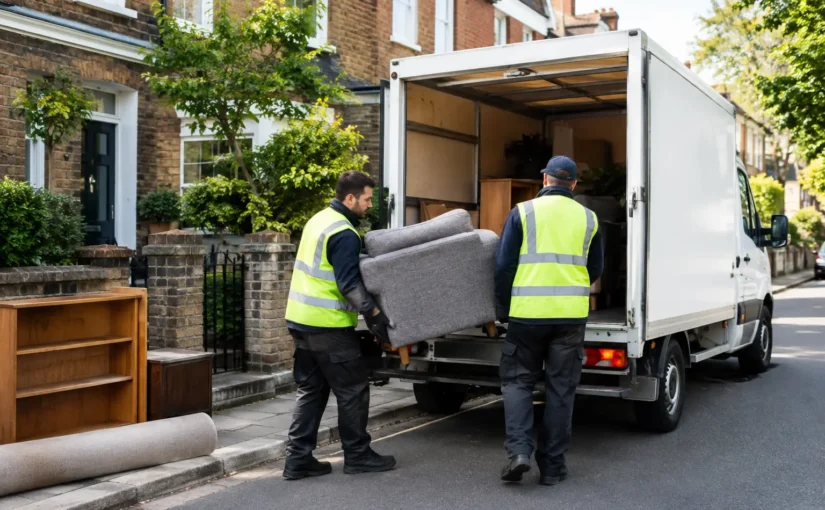
A pile of unwanted furniture on a Crouch End pavement can become someone else’s problem very quickly if it is collected by the wrong person. When customers ask, “Are Crouch End clearances licensed?”, they are usually trying to avoid fly-tipping, unexpected charges and the worry that their rubbish may not end up where it should.
For household rubbish removal, the answer should never be based on a reassuring advert or a cheap verbal quote. A reputable clearance company must be able to show that it is properly registered to carry waste and should take clear responsibility for what happens after collection. That protects you, your property and the local area.
Are Crouch End clearances licensed?
In everyday terms, a legitimate rubbish clearance company is often described as “licensed”. More precisely, a business that transports waste for customers should be registered as a waste carrier with the relevant environmental authority. For most commercial clearance firms collecting household or business waste, this will normally be an upper-tier waste carrier registration.
This registration matters because rubbish does not stop being your responsibility the moment it leaves your home, flat or business premises. Under the duty of care rules, you need to take reasonable steps to pass waste to an authorised person. If an unregistered collector dumps it in a lane, park or nearby street, investigators may look for evidence of where the waste came from. Addressed packaging, delivery labels and identifiable items can all create an avoidable headache.
A proper clearance service will also use authorised disposal or recycling facilities. Registration alone is not a promise that every item can be recycled, but it is a fundamental starting point. Any company that cannot provide its registration details, brushes off questions about disposal or insists on cash with no paperwork should be treated with caution.
What to check before booking rubbish removal
You do not need to become a waste law expert before clearing a loft or emptying a rental property. A few sensible checks will tell you a great deal about the service you are considering.
First, ask for the company’s waste carrier registration details and check that they are current. A genuine operator should be comfortable answering directly. Be wary of vague claims such as “we have a licence” without a registration number or business name to support it.
Next, ask what paperwork you will receive. Depending on the job, this may be a receipt, invoice or waste transfer record. Keep it with your records, especially after a house clearance, landlord clean-out or office move. It shows who collected the waste and when the collection took place.
It is also worth asking how the quote is calculated. Responsible disposal has real costs, so a price that sounds impossibly low can be a warning sign. Reliable firms explain whether the estimate is based on the volume of rubbish, labour, access, loading time and specialist items. The cheapest quote is not always the most affordable once hidden charges or poor disposal practices are considered.
Finally, check that the collector understands the waste involved. General household rubbish, old wardrobes, garden bags and non-hazardous renovation debris can often be removed in one visit. Paint, chemicals, gas bottles, asbestos and certain batteries need separate arrangements. A professional team will identify any restrictions before loading rather than discovering them after the job has started.
Why local knowledge matters in Crouch End
Crouch End has plenty of properties where clearance work is not simply a matter of pulling up outside and filling a vehicle. There are converted flats with shared entrances, Victorian terraces with narrow side access, busy roads, controlled parking and upper-floor properties without lifts. A company familiar with North London should ask the right access questions before arrival.
For a household rubbish clearance, it helps to tell the team whether items are in a loft, basement, rear garden or communal area. Mention parking restrictions, stairs, large furniture and anything that may need dismantling. This allows the collection to be planned properly, helps avoid delays on the day and gives you a more accurate quotation.
It also protects your neighbours. Leaving bulky waste in a shared hallway or outside a block while waiting for collection can block access and may cause disputes. A hands-on clearance service removes items from where they are stored, loads them into the vehicle and leaves the area swept and usable. That is usually far less disruptive than arranging a skip where space is limited.
Responsible disposal is more than taking it away
The best outcome for unwanted items is not always the same. Some materials can be separated for recycling, while usable furniture or household goods may have another route where appropriate. The exact result depends on condition, local facility acceptance and safety requirements, so no responsible company should promise that every single item will be recycled.
What they should promise is careful sorting and lawful disposal. Metals, timber, cardboard, electrical items and green waste may all need different handling. Electrical equipment deserves particular care because it can contain components that should not be mixed with general rubbish. Fridges and freezers, for example, require specialist treatment.
For customers, this approach offers a practical benefit as well as an environmental one. You get the room back without spending a weekend making repeated trips to a recycling centre, lifting heavy items or trying to work out which materials can go where. The clearance team does the physical work and manages the waste stream responsibly.
Common warning signs to avoid
A professional clearance business does not need to pressure you into an immediate decision. Be cautious if a collector will only communicate through social media, has no clear business identity, refuses to provide paperwork or asks you to leave rubbish outside for an unnamed person to collect.
Another concern is a quote that changes dramatically after the vehicle arrives, without a clear reason. Some variation can be reasonable if the amount of waste is very different from the photographs or description provided. But the basis for any change should be explained before work continues.
You should also avoid anyone offering to remove hazardous materials without asking what they are. Hazardous waste is not an inconvenience to be hidden in a mixed load. It needs the correct handling route, and an honest company will tell you what it can safely collect.
A straightforward way to arrange a clearance
Start by describing the items you need removed and send photographs if requested. Photos help estimate volume, identify large or awkward pieces and spot items that require specialist disposal. You can then agree a collection time that suits your household, tenant changeover or business schedule.
On the day, make sure the team can access the items and point out anything that must stay. This is particularly useful during a garage, shed or loft clear-out, where stored belongings can be mixed with rubbish. A good crew works carefully around the property and confirms the job before leaving.
Mullarkey’s Clearances provides prompt and professional rubbish removal across Crouch End, with flexible bookings for household clear-outs, unwanted furniture, garden waste and more. We handle the lifting, loading and responsible disposal, giving customers a practical alternative to skip hire without the hassle of arranging a permit or doing the heavy work themselves.
If you are comparing local clearance firms, ask the licensing question early and keep the answer on record. Request a free quotation with a clear description of your rubbish and access, then choose a service that can show it will treat your property, your waste and your neighbourhood with proper care.