
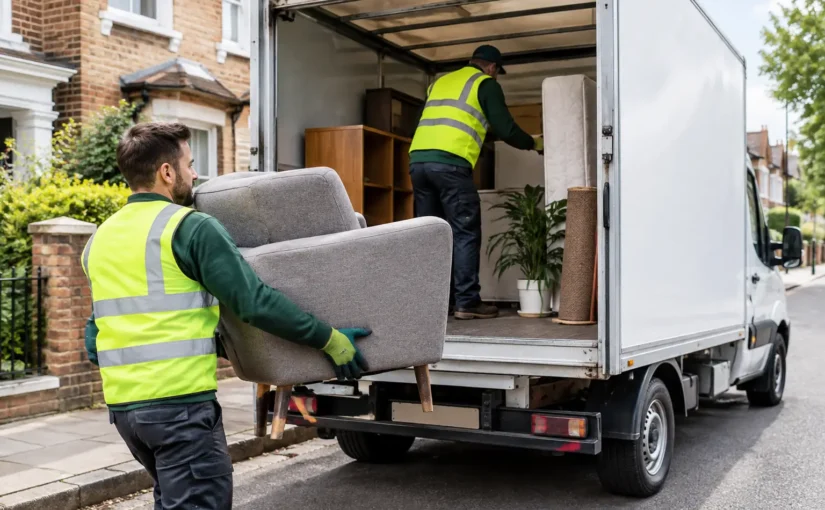
A pile of unwanted furniture in a Hampstead hallway can quickly become more than an eyesore. It can hold up a move, delay a refurbishment or leave a landlord unable to prepare a flat for new tenants. When comparing Hampstead council collection versus clearance, the right choice usually comes down to three things: how quickly the waste needs to go, what it includes and how much work you are willing to do yourself.
Council services can be useful for planned disposal of a few eligible bulky items. A professional household rubbish removal service is often the more practical option when time is short, access is awkward or the load is mixed. Knowing the difference before booking helps you avoid a missed collection, an unsuitable item list or waste sitting outside longer than it should.
When a council collection makes sense in Hampstead
The council’s bulky waste collection service may suit residents with a small number of accepted household items and a flexible timetable. This can be a sensible route after replacing a sofa, bed frame or appliance, provided the item meets the council’s current conditions and you can place it at the agreed collection point.
The trade-off is that council collections work to set booking slots, preparation rules and item restrictions. You will normally need to arrange the collection in advance, describe the items accurately and ensure they are left where the crew can safely collect them. If access is through a narrow communal entrance, a lower-ground flat or a shared garden, moving heavy items outside can be difficult and may not be appropriate.
It is also worth checking the latest council guidance before relying on this route. Accepted items, charges, collection days and requirements for where waste is left can change. Bagged household rubbish, renovation materials, garden waste and certain electrical items may need a different disposal arrangement.
For a straightforward, non-urgent bulky item collection, the council can be a good fit. It is less suitable when you need the property cleared promptly, have more than a few items or cannot safely bring everything to the kerbside yourself.
Hampstead council collection versus clearance: the practical difference
A clearance service is collection carried out around your needs rather than a fixed municipal collection schedule. The team comes to the property, assesses the load and removes the rubbish from the room, garden, garage, loft or office where it is stored. This is particularly helpful in Hampstead, where steep approaches, controlled parking, period properties and multi-storey conversions can make self-moving waste a challenge.
With professional clearance, you are paying for labour, loading, transport and responsible disposal as well as the removal itself. That can make it more expensive than a single pre-booked council collection for one eligible item. However, it can represent better value when several jobs are involved, such as clearing old wardrobes, broken chairs, carpets, boxes, mattresses and unwanted appliances in one visit.
Speed is another clear difference. If a tenant has moved out unexpectedly, builders have left packaging and offcuts behind, or a house sale is approaching, waiting for a council slot may not be realistic. A local clearance team can often offer same-day or scheduled collection, subject to availability, and remove the load without requiring you to hire a skip or make repeated trips to a recycling centre.
Professional clearance is not a way to bypass rules on hazardous waste. Paint, chemicals, gas bottles, asbestos, clinical waste and other restricted materials need to be identified before collection so they can be handled through the correct route. A reputable provider will explain what can be taken and flag anything needing specialist disposal.
Choose based on the rubbish, not just the headline price
The cheapest-looking option is not always the lowest-cost solution once lifting, time and potential delays are considered. Start by looking at the whole load. A single, serviceable item that fits the council’s rules may be best booked through the council. A mixed household clear-out is generally better suited to a clearance service.
Think about where the waste is located too. Carrying a dismantled wardrobe down several flights of stairs, taking bags through a shared corridor or moving a heavy washing machine from a basement can involve real risk. A hands-on clearance service removes that pressure and helps protect communal areas from damage or obstruction.
For landlords and managing agents, speed and presentation often matter as much as disposal cost. A prompt clearance can get a Hampstead rental property ready for cleaners, decorators or viewings without leaving abandoned items by the pavement. For small businesses, it can clear unwanted desks, shelving, packaging and office clutter with minimal disruption to the working day.
What a household rubbish clearance can take
A typical household clearance can cover the awkward mix that often builds up during a move, declutter or refurbishment. That may include furniture, mattresses, white goods, cardboard, bags of general household rubbish, small electricals, shelving, toys, unwanted kitchen items and garden clutter.
The service is especially useful after a loft or garage clear-out, where waste is rarely neat or uniform. Rather than sorting everything into a skip and arranging permits or collection dates, you can have a team load it directly. This saves space outside the property and means you do not need to estimate the right skip size.
Before requesting a quotation, separate anything you intend to keep, donate or sell. Take a few clear photographs of the waste and mention large, heavy or unusually placed items. This allows the collection team to provide a more accurate price and arrive prepared with the right number of operatives.
Responsible disposal still matters
Whether you use a council service or private collection, avoid leaving rubbish on the pavement before an agreed collection time. In busy residential streets, it can block pedestrians, create a safety issue and be treated as fly-tipping if it is not collected as arranged.
If you choose private clearance, use a properly licensed waste carrier. Ask for a clear quote, confirm what is included and make sure the provider is responsible for taking the waste to an authorised facility. Responsible firms sort suitable materials for recycling where possible, rather than treating every load as general waste.
Mullarkey’s Clearances provides prompt, professional household rubbish removal across North London, with careful loading and licensed waste handling. For customers who need waste removed from inside the property rather than left outside, it offers a practical alternative to waiting for a bulky collection slot.
Getting the right quote for your Hampstead clearance
A useful quote should reflect the volume and type of rubbish, the labour needed and access at the property. A ground-floor collection with nearby parking is different from a top-floor flat with no lift, for example. Honest information at the start prevents surprises on collection day.
Tell the team whether there are stairs, restricted parking, concierge arrangements, timed access or heavy items such as American-style fridge freezers. If a collection needs to happen around a tenancy handover or contractor visit, give the deadline when you enquire. The team can then advise whether same-day collection is available or arrange a suitable booked slot.
Is clearance better than skip hire?
For many Hampstead homes, yes. A skip requires space, loading effort and sometimes a permit if it sits on the road. Clearance is more convenient when you want operatives to do the lifting and remove the waste in one visit. A skip may still suit a long renovation where rubbish will be generated gradually over several days.
Can the team remove rubbish from upstairs?
Yes, provided access is safe and the items have been disclosed when requesting the quote. Mention staircases, lifts, tight turns and particularly heavy furniture so the collection can be planned properly.
Do I need to be there for collection?
It is usually best to be present to confirm what is being removed and provide access. For managed properties or commercial premises, a responsible keyholder or authorised representative can often meet the team instead.
If unwanted items are taking up valuable room or a deadline is close, request a free quotation with photographs and collection details. The quickest solution is usually the one that removes the lifting, waiting and disposal uncertainty from your day.